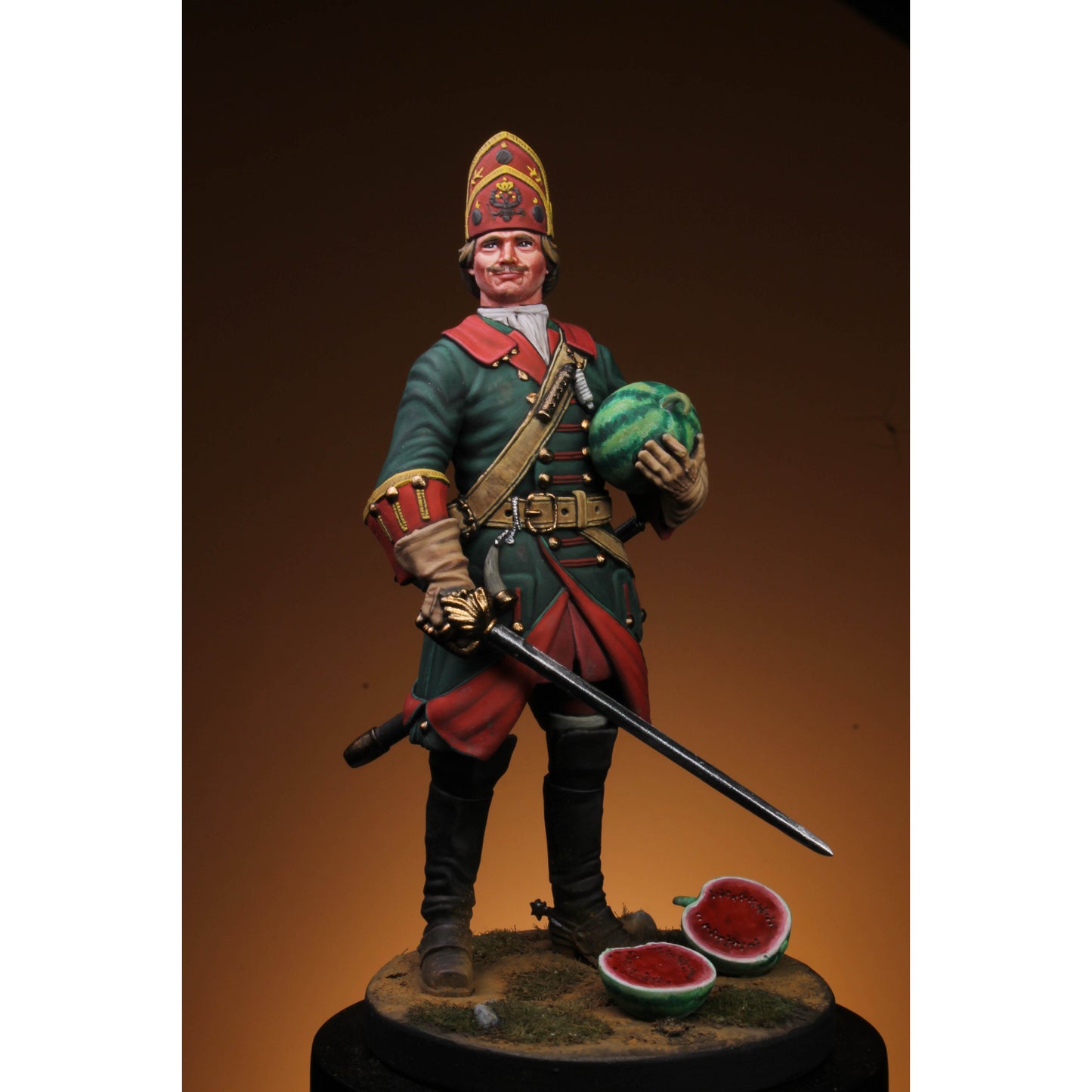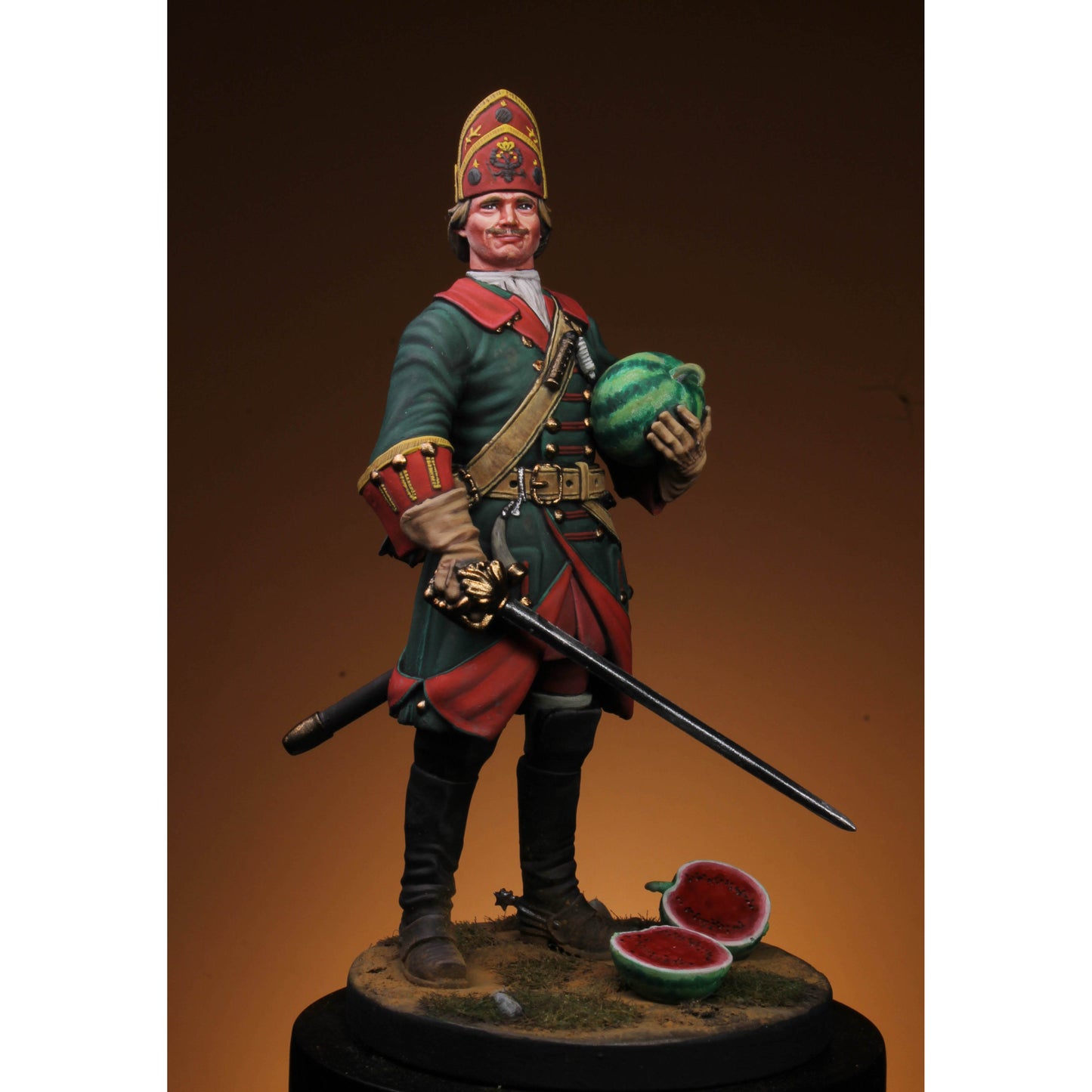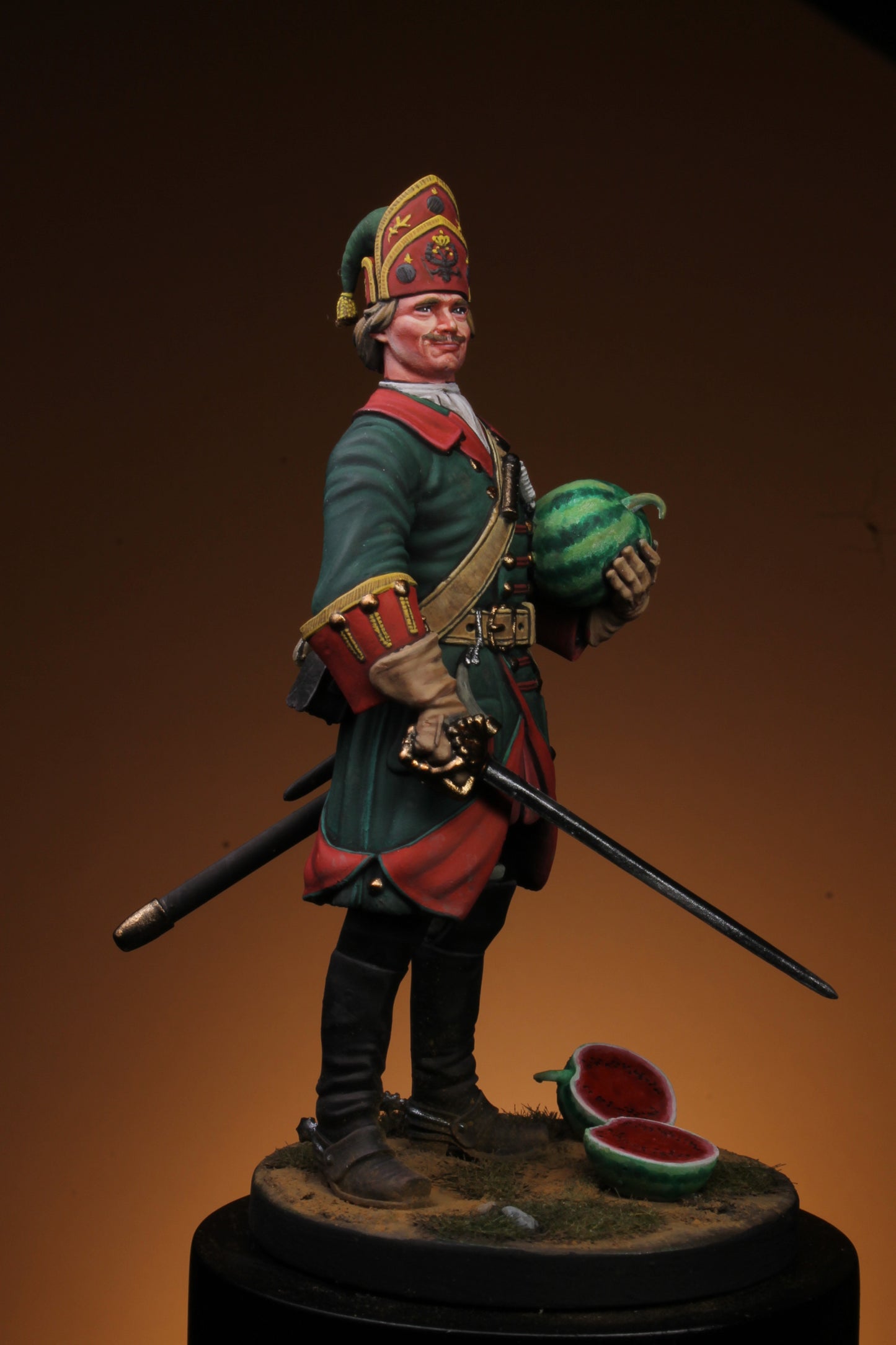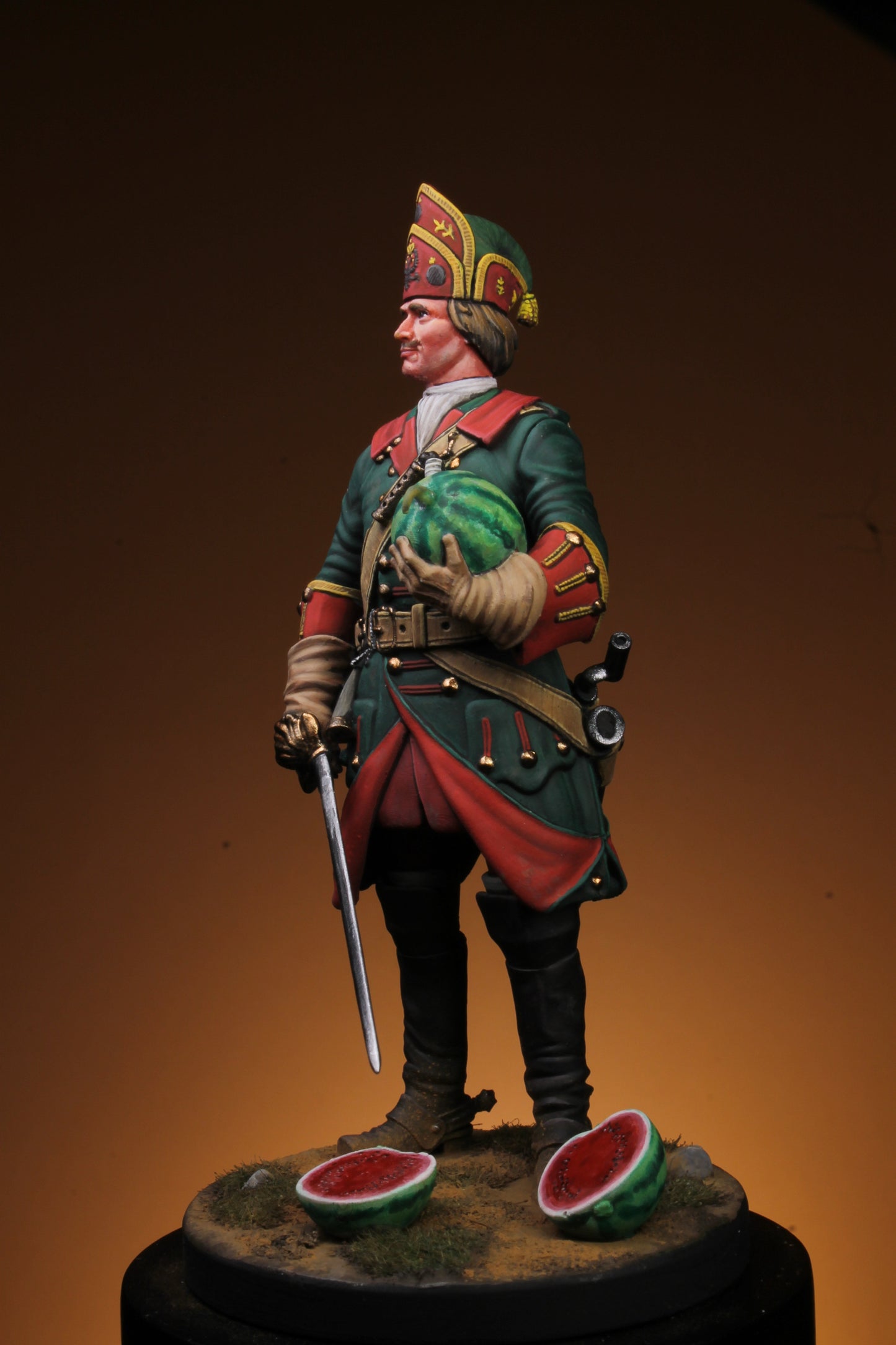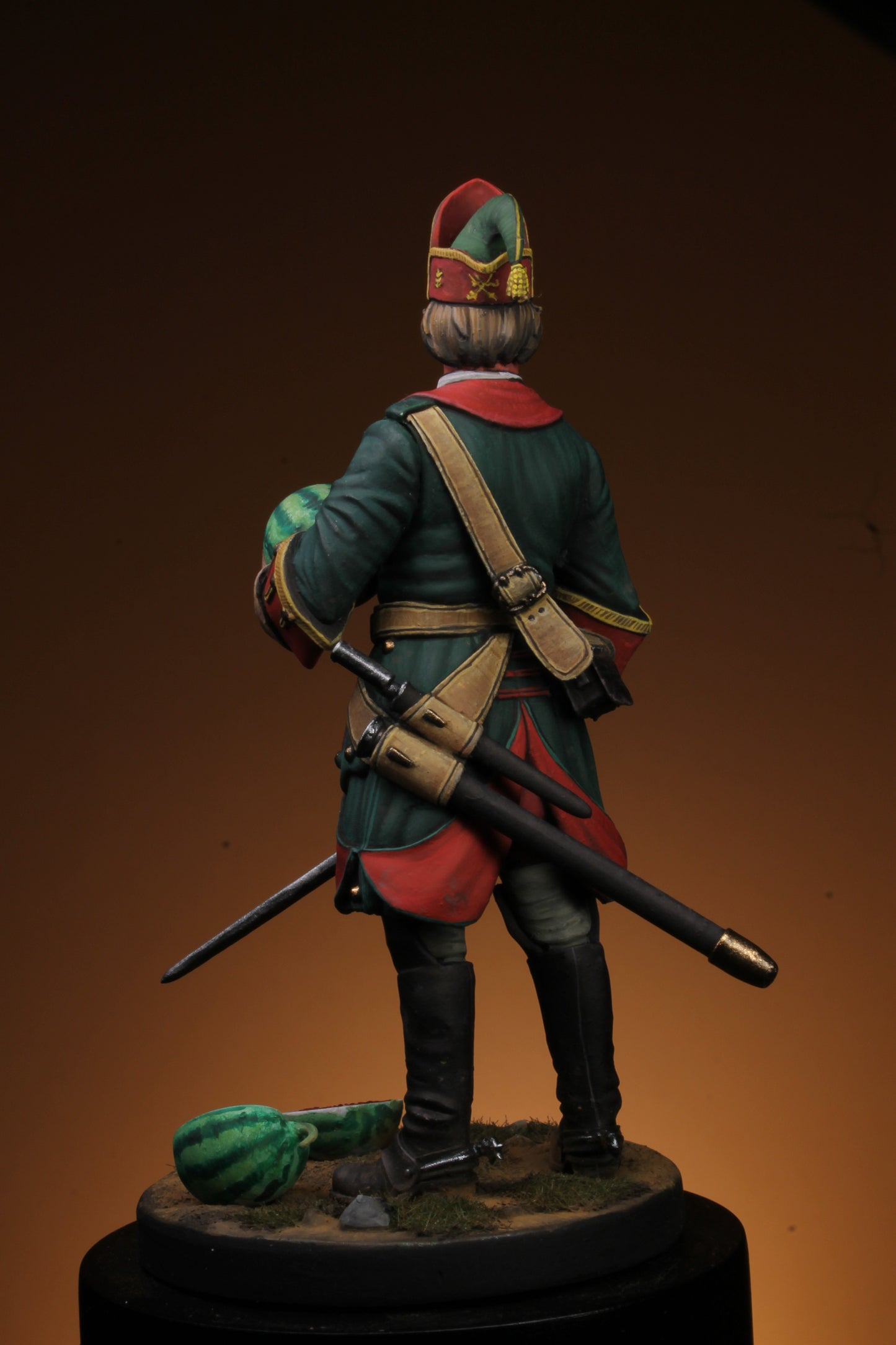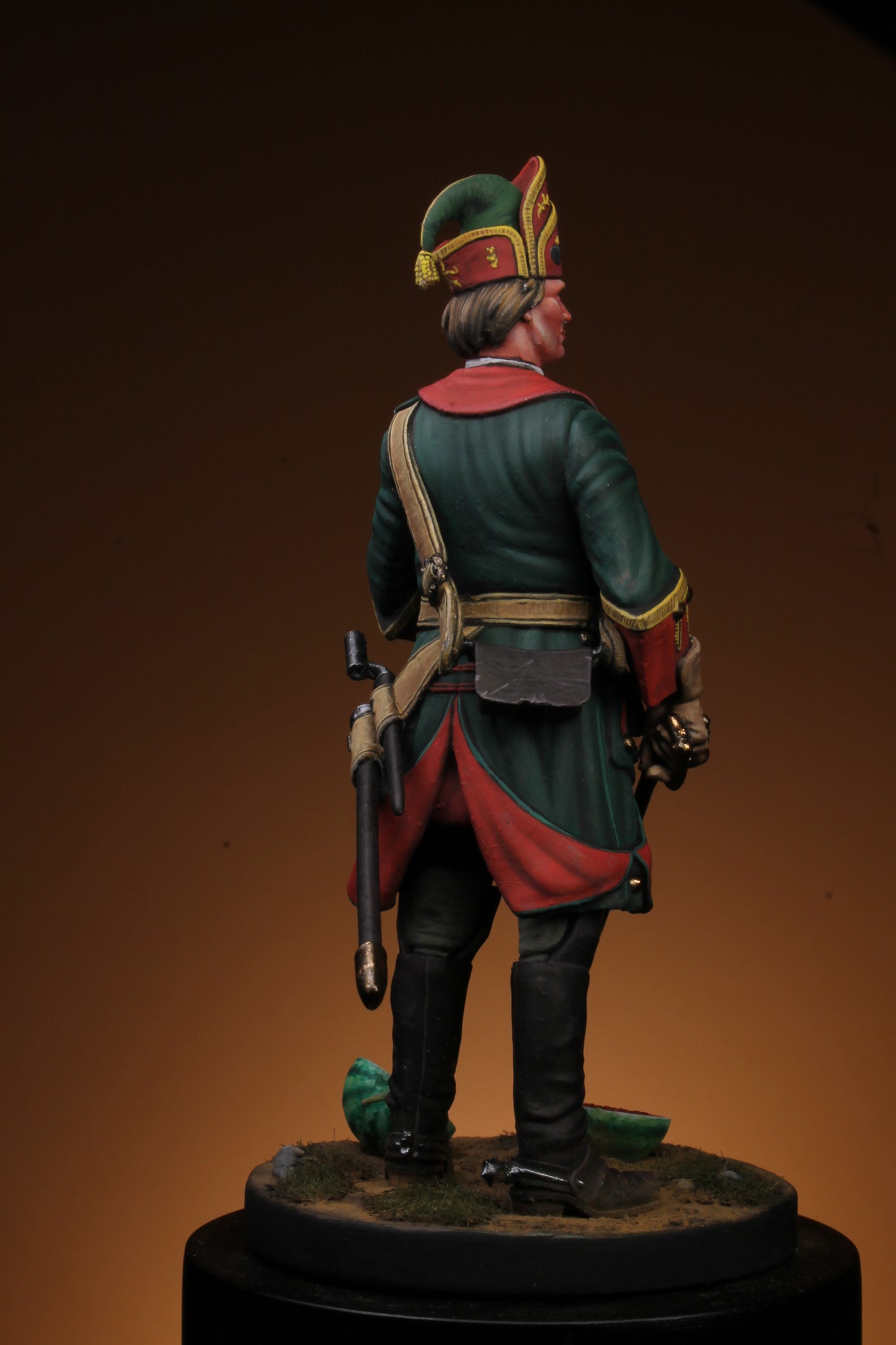
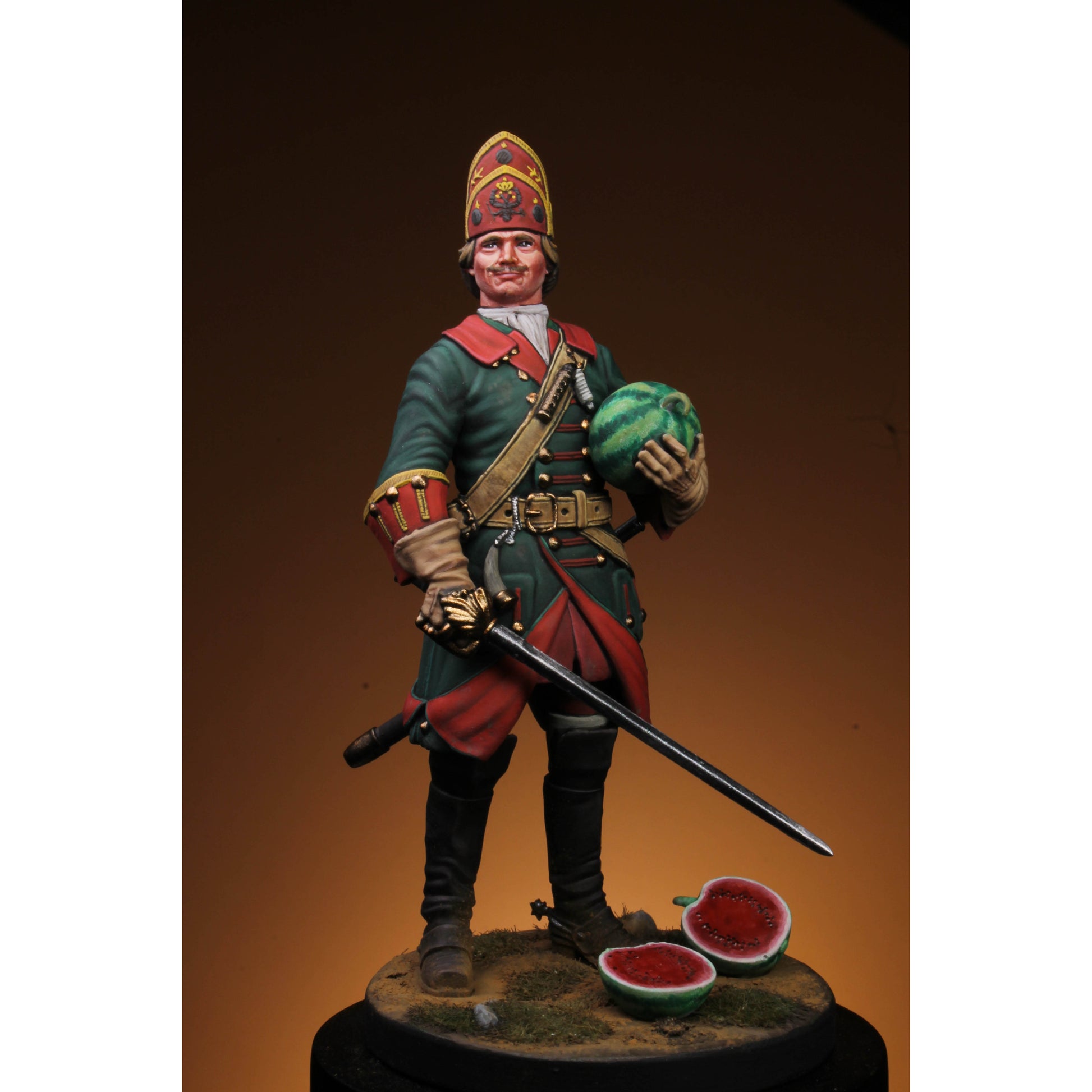
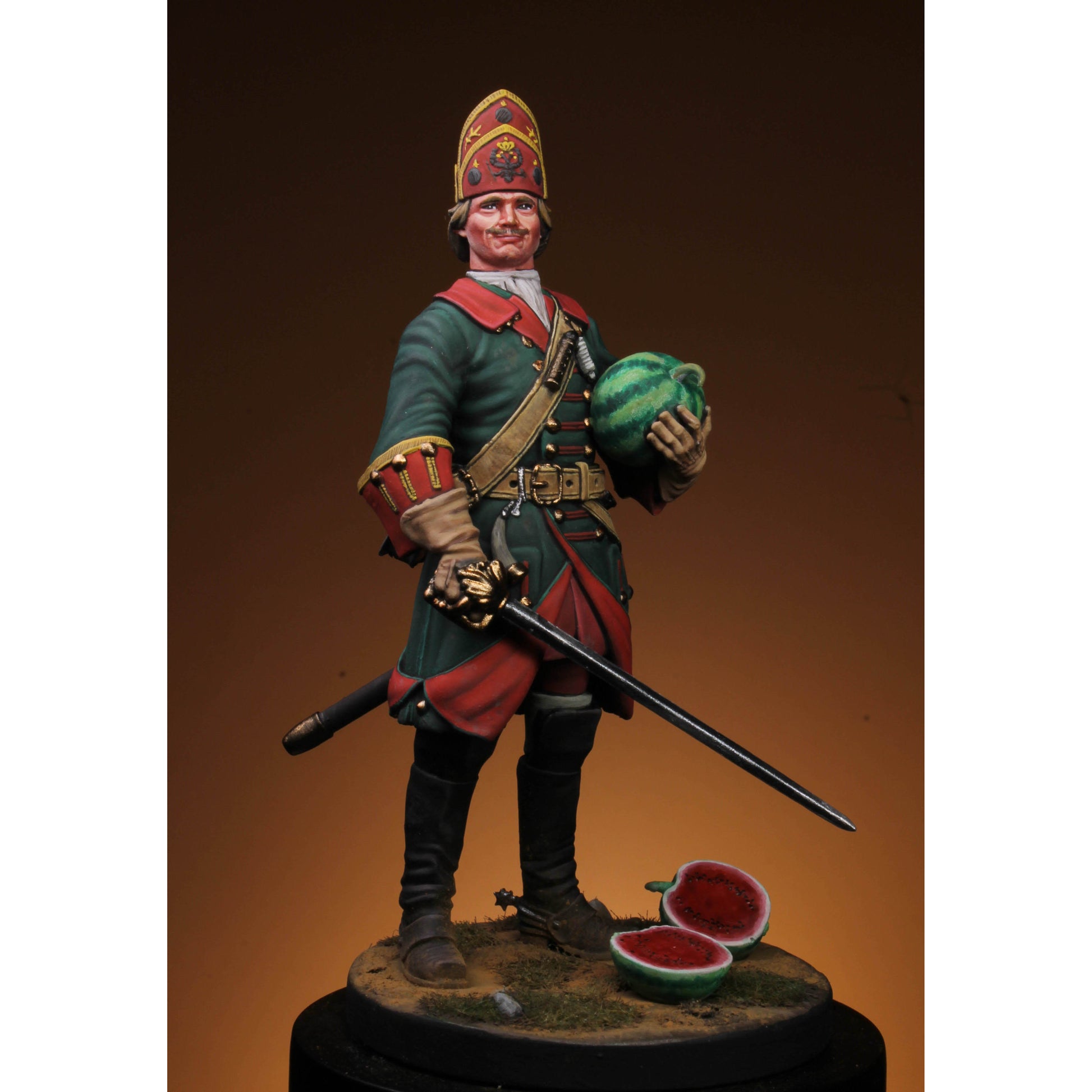
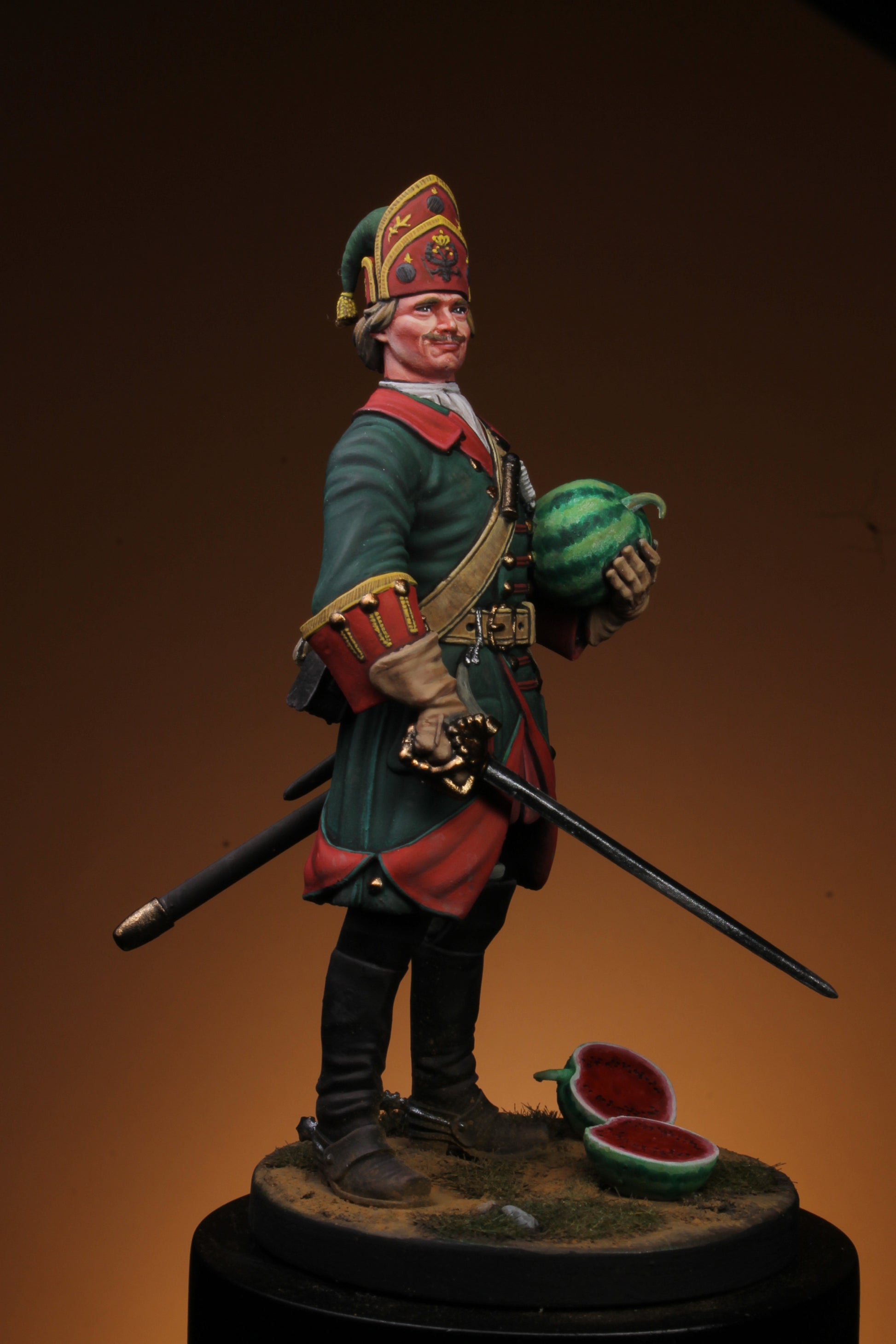
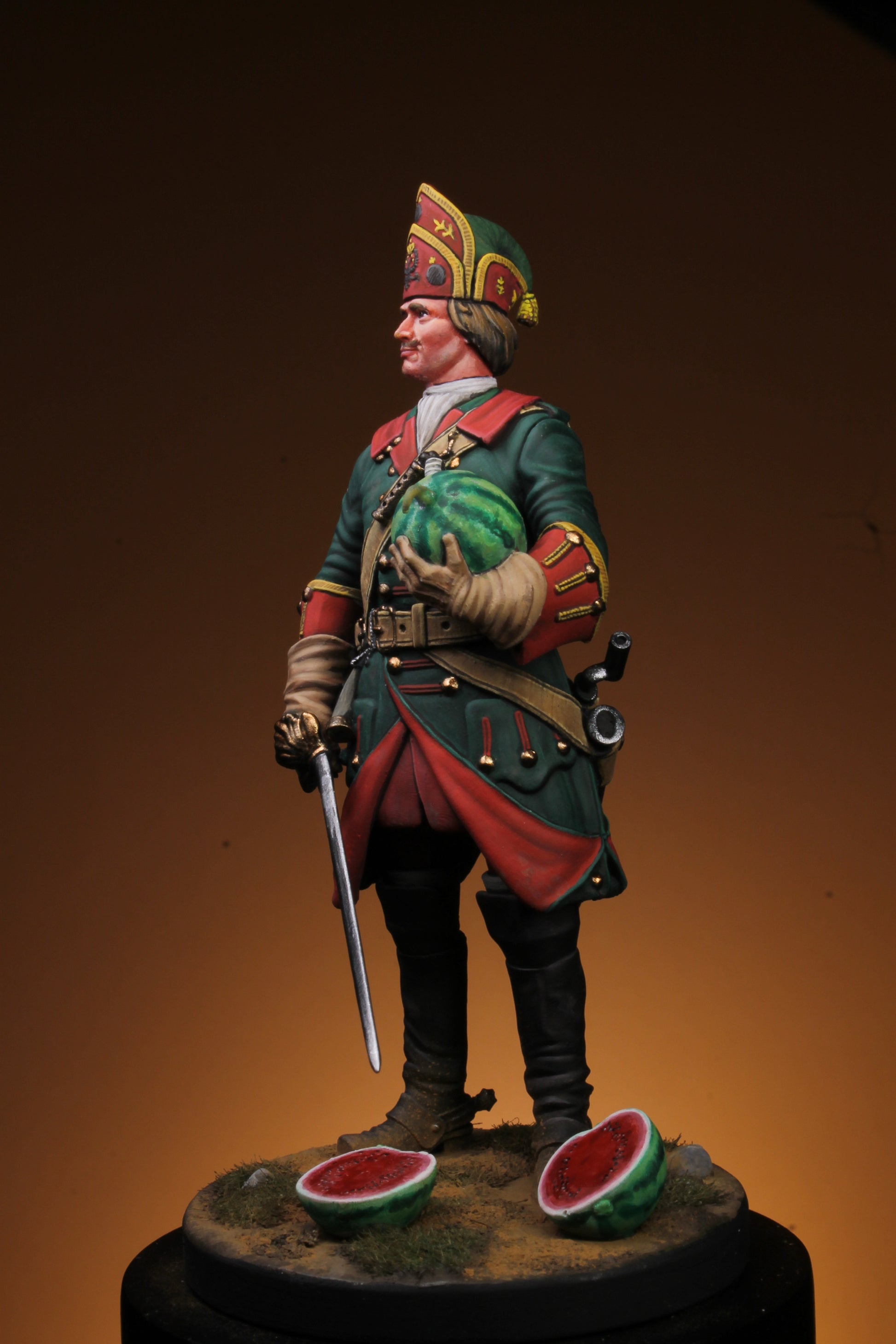
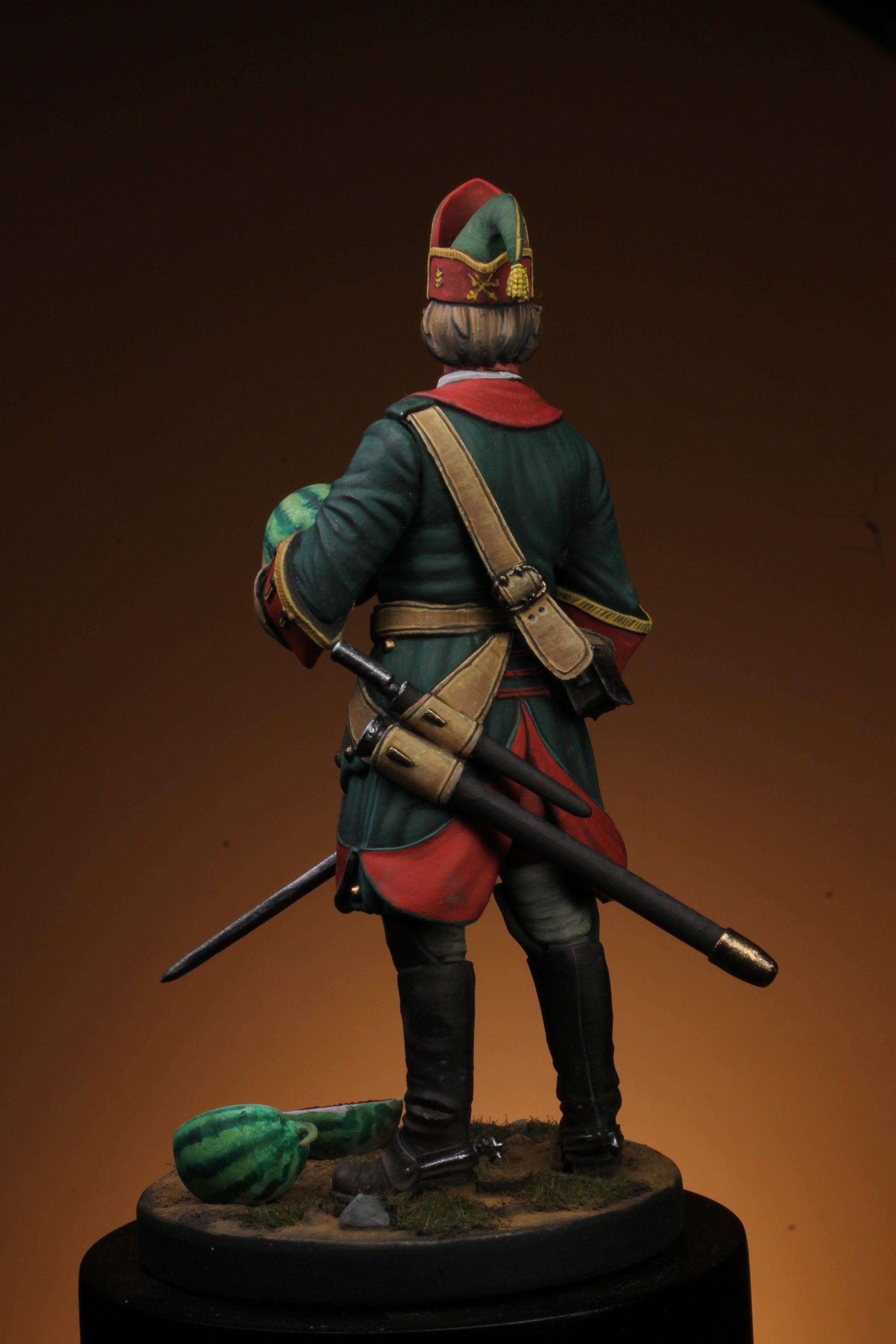
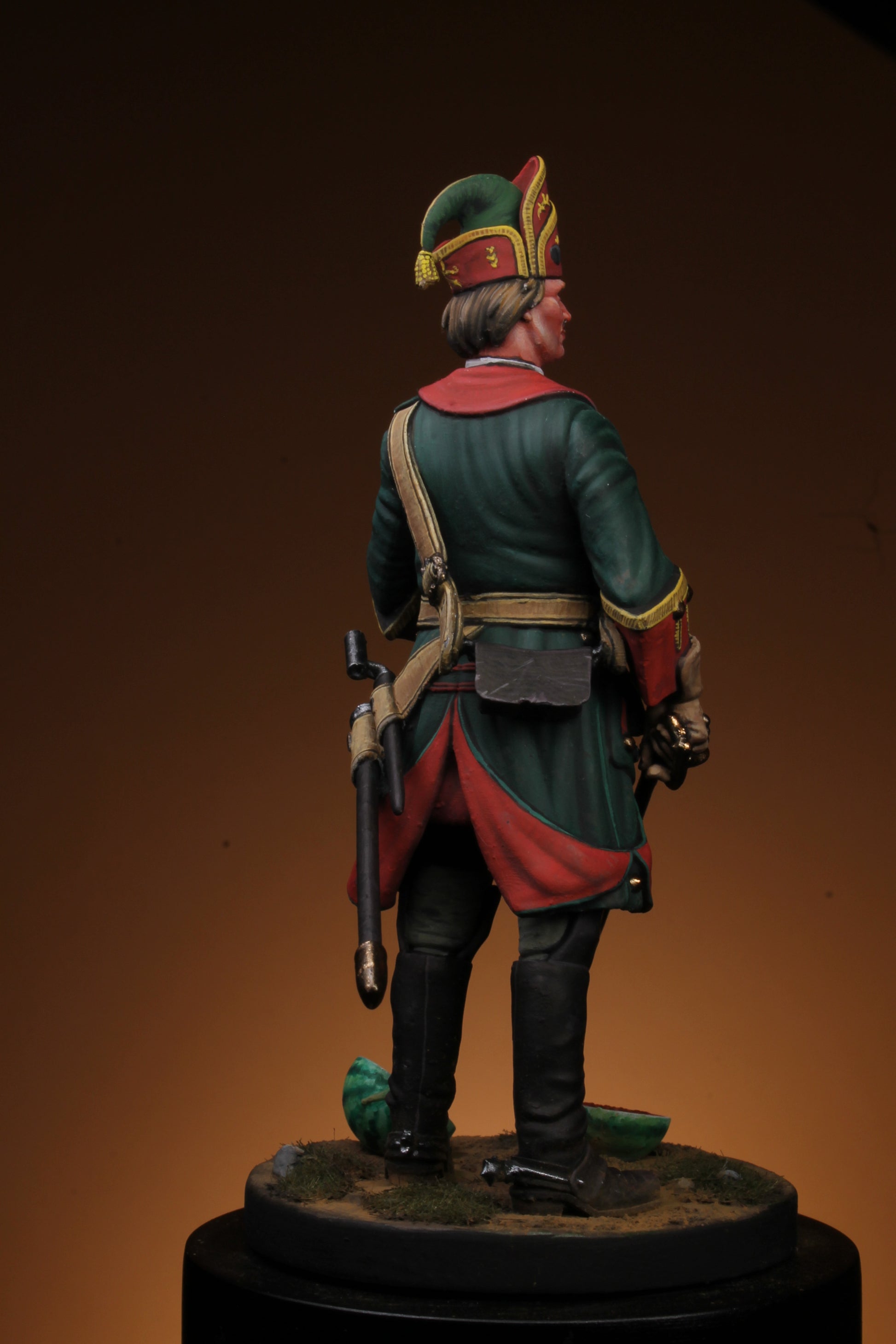
Russian Horse Granadier, Poltava Campaign 1709 - 75mm
Russian Horse Granadier, Poltava Campaign 1709 - 75mm
| Brand | Militia models |
| Scale | 75 mm. |
| Material | Resin |
| Sculpture | Andrea Glioti |
| Box-Art | Andrea Terzolo |
Product not suitable for children under 14 years - Kit not painted and not assembled
On 27 August 1707, Charles XII of Sweden, at the head of his army, departed from Altranstädt in Saxony and advanced eastwards. By 7 September his troops had already crossed the River Oder at Steinau, which at that time marked the frontier with the Polish–Lithuanian territories. Meanwhile, the Russian army under Prince Aleksandr Menshikov began to withdraw towards the lands of the Tsardom of Russia, leaving western Poland to its fate. During the retreat—and in accordance with the directives issued by the Tsar himself—Menshikov implemented a scorched-earth strategy: setting fire to buildings and crops along the march, poisoning wells that might fall into enemy hands, slaughtering livestock, and, where possible, seizing animals and essential supplies. Once again, Poland became the battleground upon which the claims and ambitions of two great powers were to be tested.
Thus began what would enter history as the Poltava Campaign. Over the following two years—the duration of the entire operation—the belligerents endured the most intense phase of a conflict that had already been burning in north-eastern Europe since 1700, almost as though ushering in the new century, and which posterity would come to know as the Great Northern War (also referred to as the Second Northern War, 1700–1721).
The Great Northern War was the military conflict that brought an end to Sweden’s dominance over the north-eastern European balance of power, and permitted the rise and consolidation of a new force which, from that point onward, would shape European geopolitics for centuries to come: Russia. On one side stood the Swedish monarch Charles XII, with his Baltic commonwealth; on the other, Peter I Alekseevich Romanov of Russia—known as Peter the Great—together with his allies: the Kingdom of Denmark–Norway, the Polish–Lithuanian Commonwealth, and the Electorate of Saxony. (...)
SKU:MM-RU001
Couldn't load pickup availability